Раковый корпус
1968RussiaSoviet UnionContinental european fiction (fictional works by one author)Soviet union, fictionPatients
0.0
Open LibraryFirst lines
On top of everything, the cancer wing was Number 13.
On top of everything, the cancer wing was Number 13.
Only a prisoner in his first years of sentence believes, every time he is summoned from his cell and told to collect his belongings, that he is being called to freedom. To him every whisper of an amnesty sounds like the trumpets of archangels. But they call him out of his cell, read his some loathsome documents and shove him in another cell on the floor below, even darker than the previous one but…
About this book
'There has been no such analysis of the corrupting power of the police state in Soviet literature'--Stuart Hood in the *Listener* Solzhenitsyn, like Oleg Kostoglotov, the central character of this novel, went in the mid-1950s from concentration camp to cancer ward and later recovered. The British publication of *Cancer Ward* in 1968 confirmed him as Russia's greatest living novelist although it has never been openly published in the Soviet Union.
Themes & subjects
RussiaSoviet UnionContinental european fiction (fictional works by one author)Soviet union, fictionPatientsCancer
First published 1968Setting
Soviet UnionUzbekistanUnión SoviéticaFictionRussiaSoviet Union19551945-1991
About the author
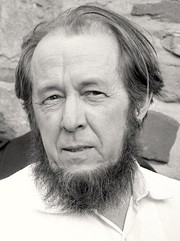
Александр Солженицын
11 December 1918 – 3 August 2008
Aleksandr Solzhenitsyn was a Russian novelist, dramatist, and historian. Through his writings he helped to make the world aware of the Gulag, the Soviet Union's forced labor camp system – particularly The Gulag Archipelago and One Day in the Life of Ivan Denisovich, two of his two best-known works. Solzhenitsyn was awarded the Nobel Prize in Literature in 1970. He was exiled from the Soviet Union in 1974 and returned to Russia in 1994. Solzhenitsyn was the father of Ignat Solzhenitsyn, a conductor and pianist. ([Source][1].) [1]: https://en.wikipedia.org/wiki/Aleksandr_Solzhenitsyn
Reviews
No reviews yet — be the first to write one from the Log screen.
Quotes
No quotes yet.